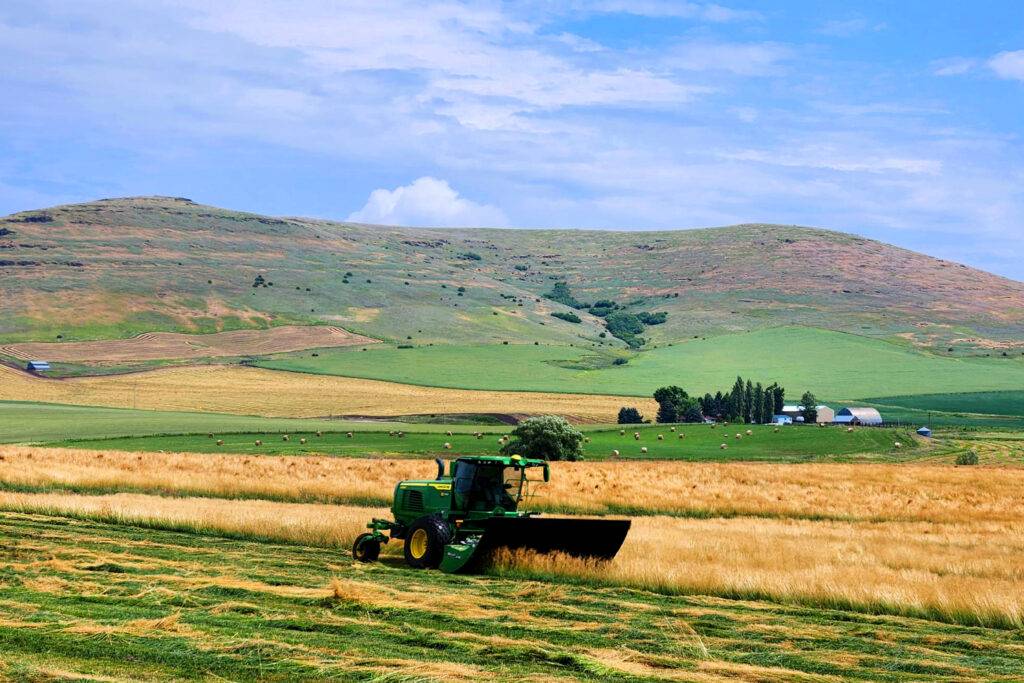
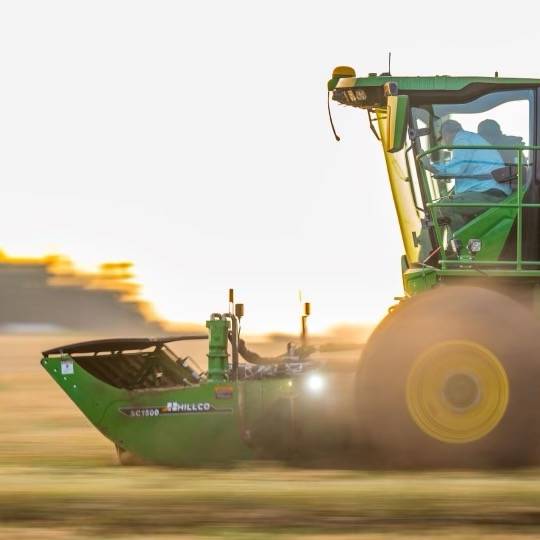
When growers ask what makes our specialty crop header different from a conventional header, the short answer is this: specialty seed crops demand gentler handling, controlled crop flow, and the ability to respond quickly within narrow harvest windows. That is the problem the Hillco TechnologiesSC1500 was built to solve. The SC1500 is a purpose-built specialty crop header designed to gently handle seed crops, preserve maximum yield, and operate at higher field efficiency so more acres can be cut within optimal timing windows.
Why Specialty Seed Crops are Hard onConventional Headers
Specialty crops are often less forgiving than broadacre forage or grain crops. Seed shatter, fragile plant structure, tangled material, sticky residue, and frequent crop changes all increase the risk of yield loss at the header. In these conditions, conventional harvesting systems such as auger platforms, draper headers, and standard disc headers can be inherently aggressive. Augers tend to consolidate and twist material, draper systems rely on reel impact to control crop flow, and many disc headers introduce uneven or abrupt transitions under the deck. Each of these interactions increases crop contact and agitation at the exact point where seed retention matters most.
Broader harvesting and extension research consistently reinforces this point: header design plays a decisive role in front-end loss, and minimizing crop impact through gentle handling and controlled flow is critical to preserving yield in specialty seed crops.
“Typically, more than 75 percent of soybean machine harvesting losses are gathering losses, so the greatest attention should be given to proper header adjustment and operation.”(Kulkarni)
That context helps explain why Hillco built the SC1500 around crop handling rather than just cutting. The Hillco header design replaces aggressive mechanical handling with a low-impact approach. It uses a curved knockdown bar to reduce crop impact, a smooth inner ceiling to maintain consistent crop flow and prevent pinning, and taller converging drums to generate airflow, carrying material with less physical interaction. The result is a header engineered to move delicate material more uniformly and with less disturbance from the moment contact is made.
Citation: Kulkarni, Subodh. Importance of Minimizing Field Losses During Soybean Harvest. FSA1048. University of Arkansas Division of Agriculture, Cooperative Extension Service, 2008. Available at: https://www.uaex.uada.edu/publications/pdf/FSA-1048.pdf.
The First Priority: Reduce Shatter Without Giving Up Productivity
For many specialty crops, protecting yield starts with minimizing how aggressively the crop is struck, dragged, or recirculated at the header. Hillco’s design is consistent on that point: reduce crop impact, reduce crop contact, and improve crop flow. That focus aligns with the harvesting goal to consistently and gently handle and control crop feeding as key to reducing shatter and front-end loss.
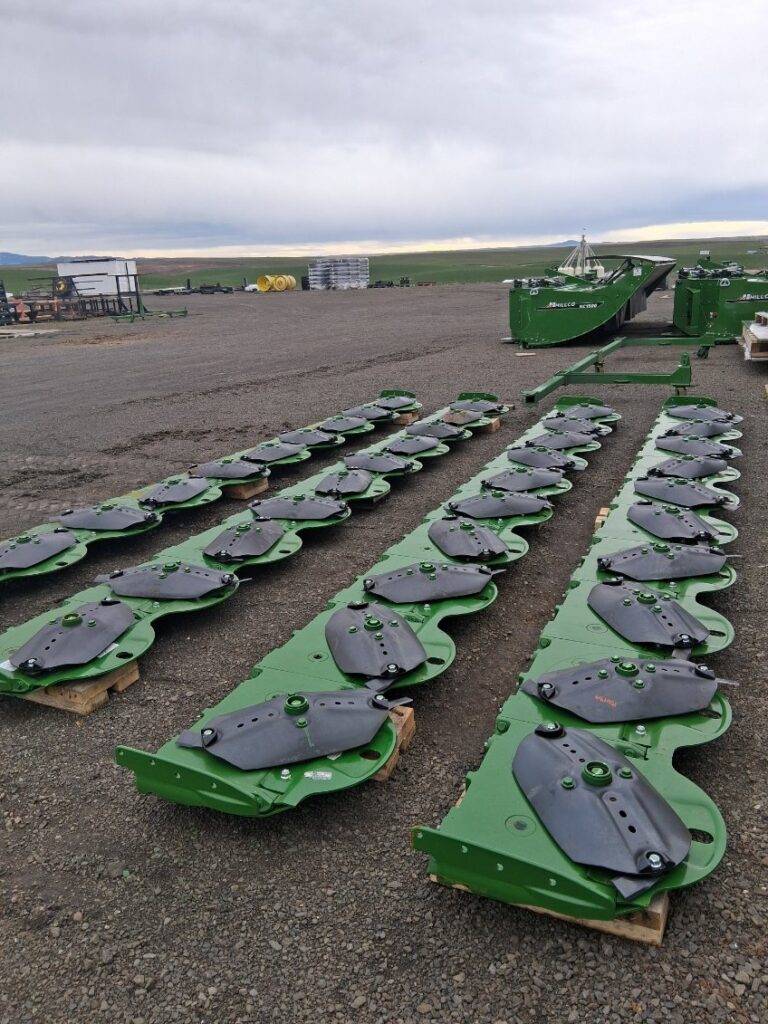
At the same time, productivity cannot come at the expense of crop control. The SC1500 incorporates a rotary cutter bar designed to support higher operating speeds (10+mph) while maintaining consistent, low-impact crop handling. That distinction matters because capacity only delivers value if crop movement remains controlled and seed loss is minimized.
This combination of gentler handling and sustained productivity is what makes the SC1500 most notable. The objective is not simply to increase acres per hour, but to enable more acres to be windrowed within the optimal window, before conditions shift and losses climb. That same timing principle is widely recognized in windrowing practices, where completing more acres in the ideal harvest window often has as much impact on yield as machine speed itself.
The Second Priority: Maintain Smooth, Predictable Crop Flow
Beyond reducing shatter, consistent crop flow is critical to maintaining windrow quality and overall harvest efficiency. One of the more practical integrations of the SC1500 is that the drum speed can be adjusted from the cab to match ground speed and crop conditions. For most crops, a target drum speed of about 1200 RPM supports ground speeds up to 12 mph, but adjustments may be needed depending on conditions.
When drum speed and ground speed are matched properly, the crop should “roll over” smoothly at the forming drum indicating steady, controlled movement through the header. If that rolling action is not achieved, drum speed can be increased to improve flow, while pulsing or surging through the throat may indicate the need to slow the drums. These adjustments highlight a key principle: consistent crop movement is just as important as cutting performance.
Unlike more fixed mechanical systems, this level of adjustability allows operators to actively manage crop flow instead of reacting to it. The Hillco SC1500 further supports this control by allowing independent adjustment of left and right drum speeds. This gives operators the ability to fine-tune crop feeding across the width of the header, rather than relying on a single uniform setting. The result is a more balanced, predictable flow that contributes to uniform windrow formation and improved downstream performance.
The Third Priority: Handle Crop Diversity Without Wasting Time on Cleanout
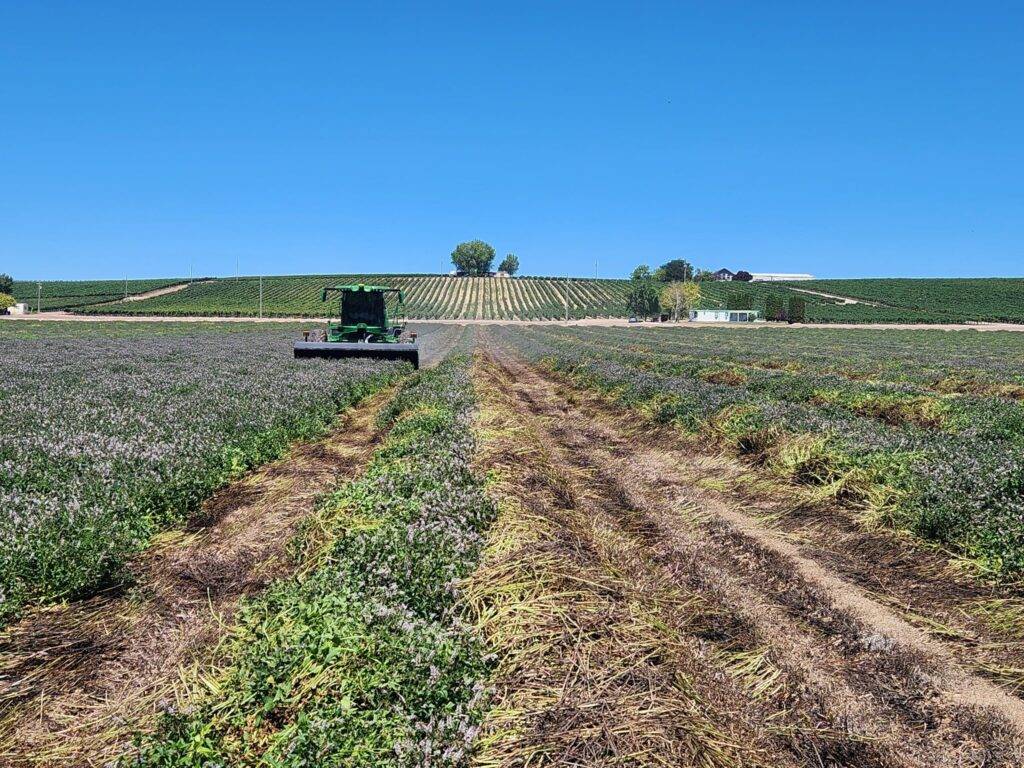
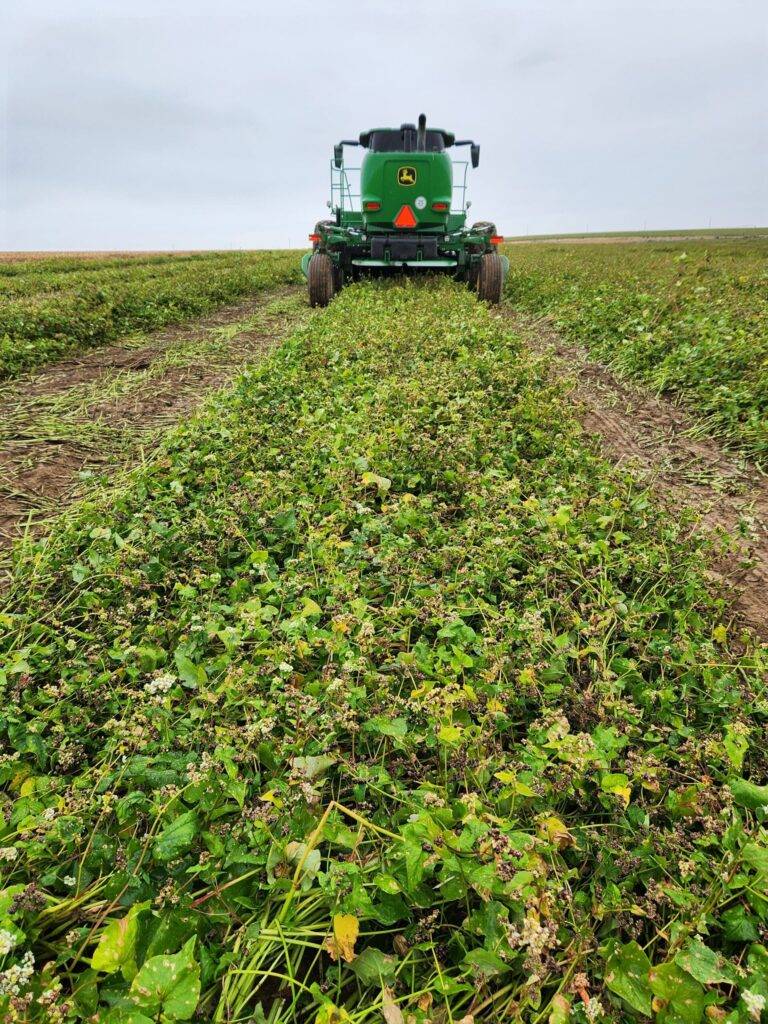
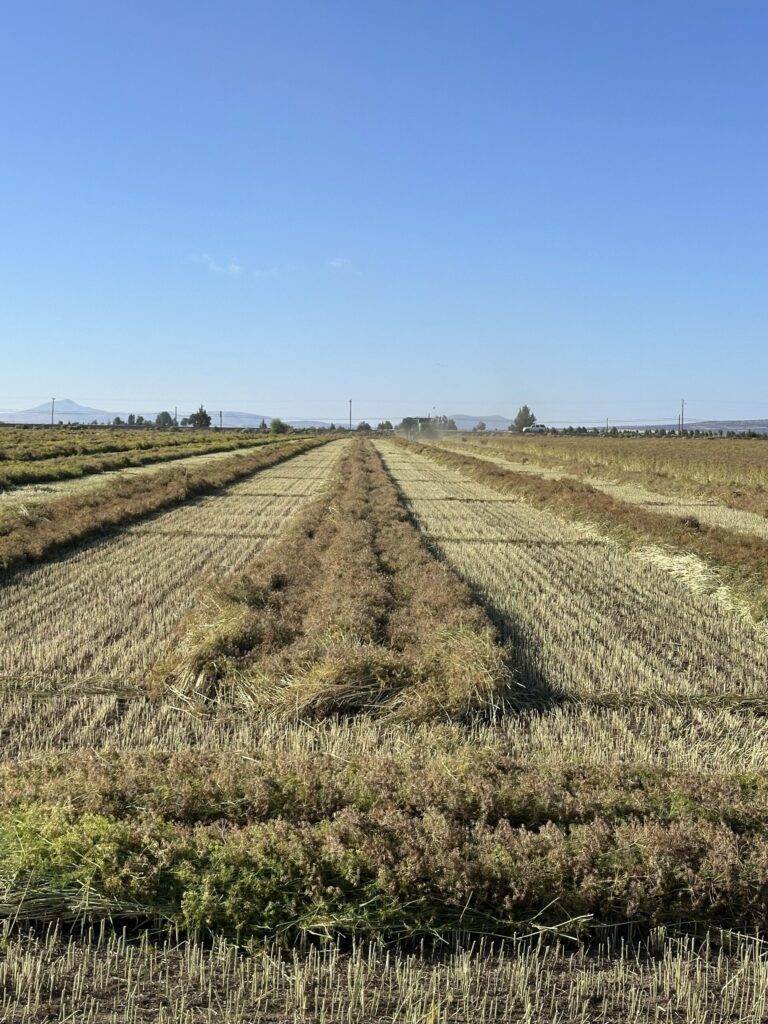
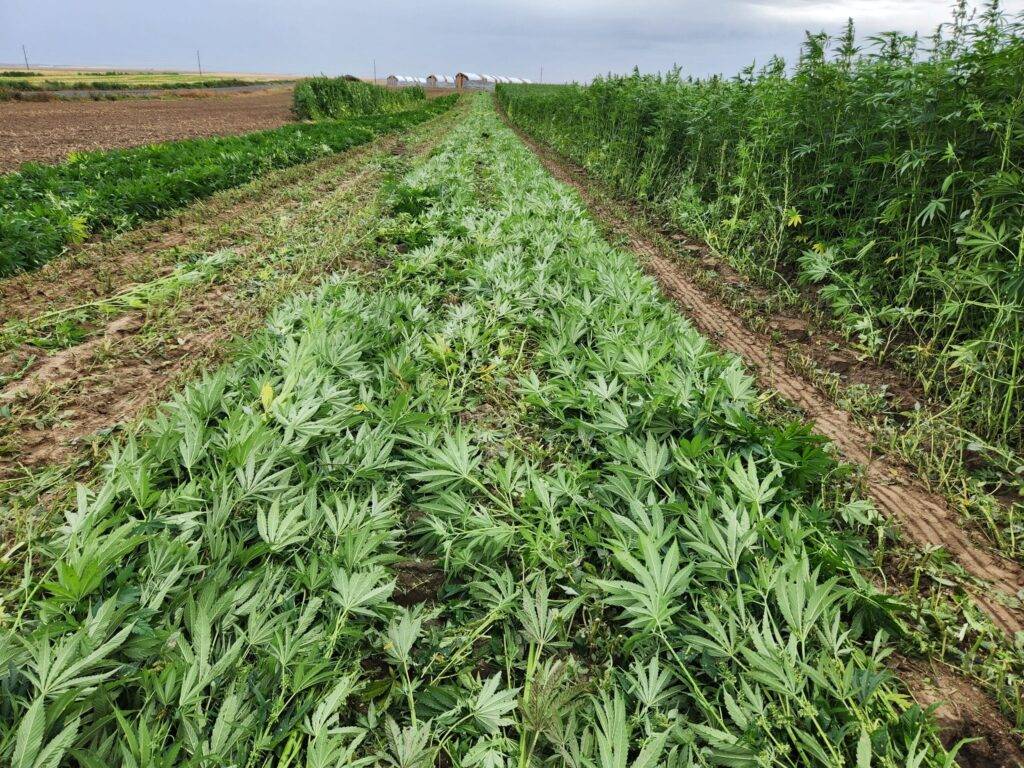
PeppermintBuckwheatDillHemp
The SC1500 is particularly well suited for operations that move between multiple seed crops and varieties. In these situations, header cleanout is not just a maintenance task, it is a critical step for maintaining variety purity and avoiding contamination. Hillco designed the SC1500 to reduce header cleanout time between crops, helping operators transition more quickly without sacrificing quality.
The range of supported crops is extensive, including canola, clover, coriander, dill, hemp, meadowfoam, mint, mustard, radish, spinach, sugar beets, teff, triticale, turnip, vetch, and more. That breadth reinforces an important point: variability is the norm in specialty crop systems, not the exception
Unlike headers optimized for a narrow crop profile, the SC1500 is better understood as a flexible platform for multi-crop operations. It allows growers to move between crops and conditions while maintaining consistent handling performance, without repeated adjustments or added loss.
That versatility changes the buying conversation. Rather than selecting a header for a single crop, growers can invest in a system designed to maintain handling quality across a range of specialty crops and changing conditions.
This versatility shows up in customer experience as well. Feedback from Oregon’s Willamette Valley, highlights the header’s ability to perform across a wide range of crops, with one grower noting it has replaced multiple older windrowers across their operation.
The Details
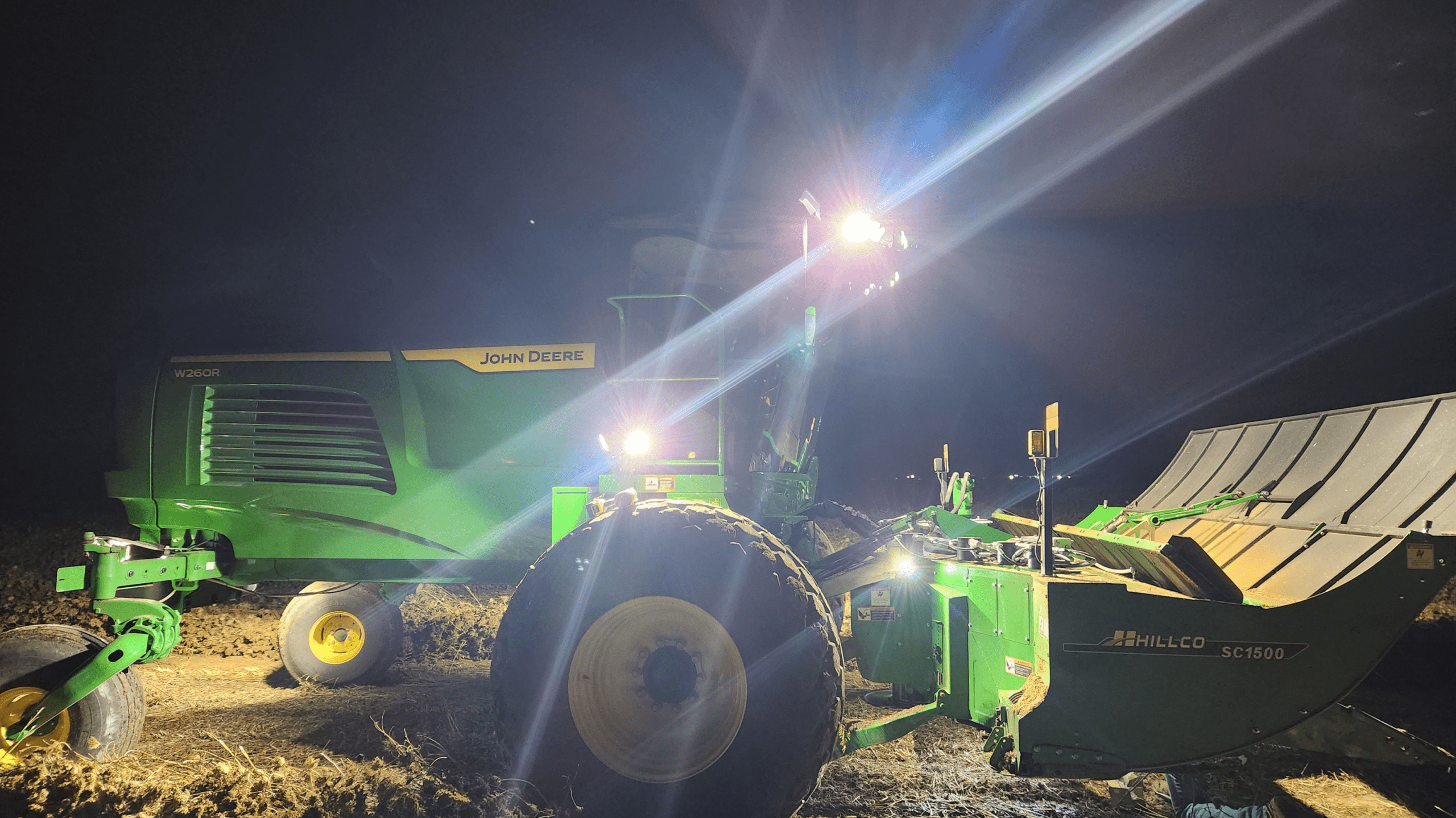
Hillco designed the SC1500 to integrate with the John Deere W260R, allowing operators to fully utilize John Deere’s Constant Cutterbar Technology. Beyond core performance, the machine reflects a clear focus on day-to-day usability. Some key points include service lights for nighttime maintenance and an optional wet kit that automatically applies solution to the cutterbar to reduce honeydew buildup and maximize uptime. The automatic pump timer functions and spray settings reinforce that the SC1500 was designed with real field conditions and maintenance demands in mind.
Additionally, cutterbar speed is critical to cut quality. In most seed crops, a minimum of 2800 RPM is needed with 3000 RPM considered optimal, while some shorter crops may require lower adjustment. This guidance and constant cutterbar technology integration underscores an important point: achieving low-loss performance depends not only on header design, but on proper setup and operation. In practice, this means a specialty header is not only about hardware. It is about giving operators the tools and control needed to maintain precise, consistent performance across changing field conditions. These operational details ultimately support the same core priorities: reducing shatter, maintaining smooth crop flow, and preserving consistency across crops
Who is the SC1500 Really For?
The clearest fit is an operation that prioritizes one or more of three outcomes: reduced shatter risk, improved windrow consistency, and the ability to move quickly within narrow cutting windows. The SC1500 is especially well suited for farms harvesting multiple specialty seed crops, handling varieties that are sensitive to aggressive feeding, or operating in regions where weather and crop maturity make timing critical.
In these environments, consistency and crop protection often carry more value than raw cutting speed alone. Hillco’s customer experience in Oregon’s Willamette Valley reflects this profile, with growers highlighting the header’s performance across a wide range of crops and conditions.
Final Word
A specialty crop header should do more than cut. It should protect yield at the header, maintain smooth and predictable crop flow, and help the operator stay on schedule when harvest timing is tight. Based on Hillco’s design philosophy and proven customer experience, the SC1500 is best understood as a purpose-built, integrated crop handling system centered on low-impact crop interaction, controlled crop flow, and consistent performance across diverse specialty seed crops.
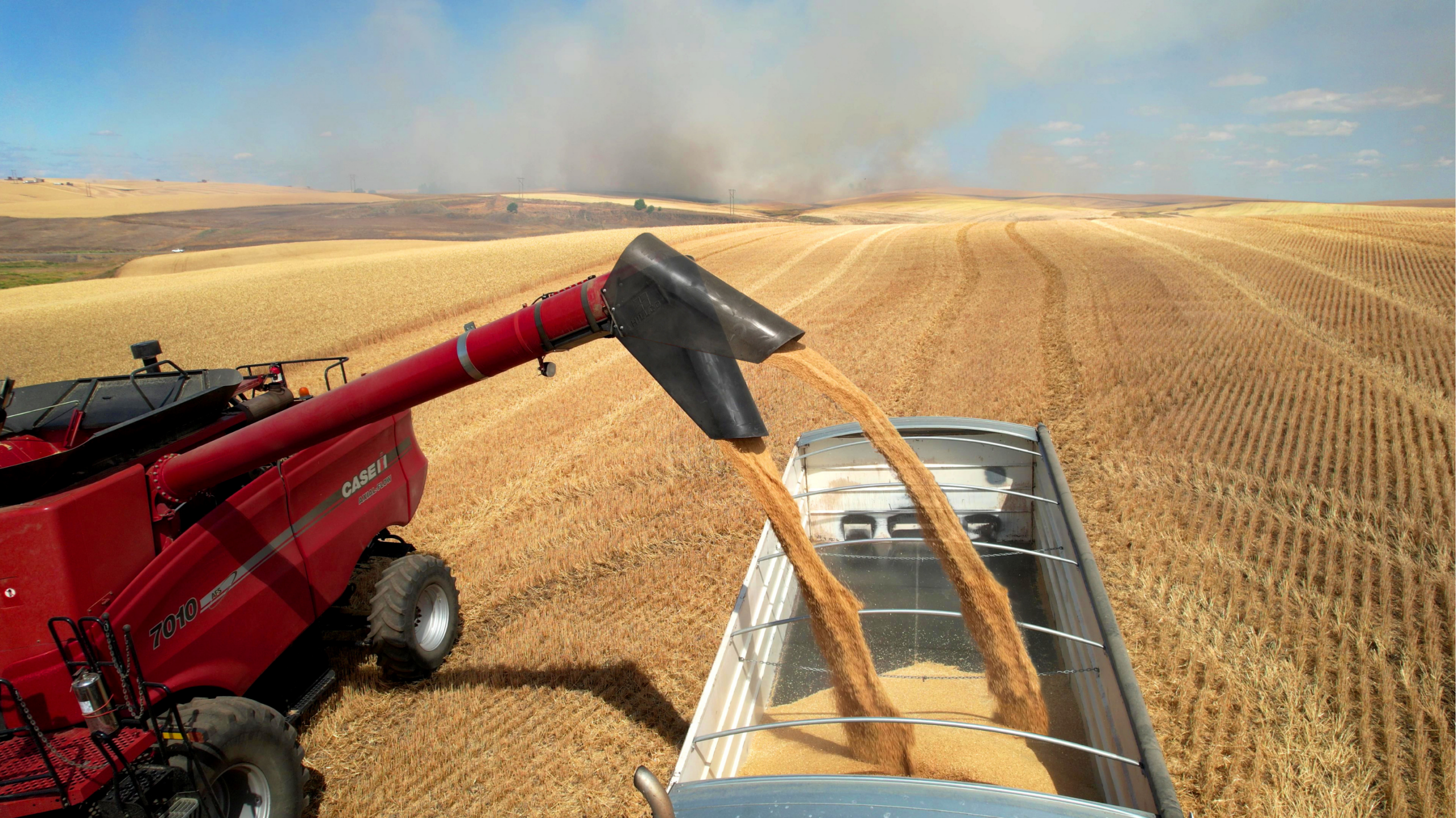
If you want better control over where grain lands in the cart, the Hillco Pivoting Spout is a practical upgrade for your Case IH combine. From the cab, a foot switch moves the spout through 37 degrees of travel, allowing you to direct the grain stream closer to or farther away from the combine without repositioning the machine.
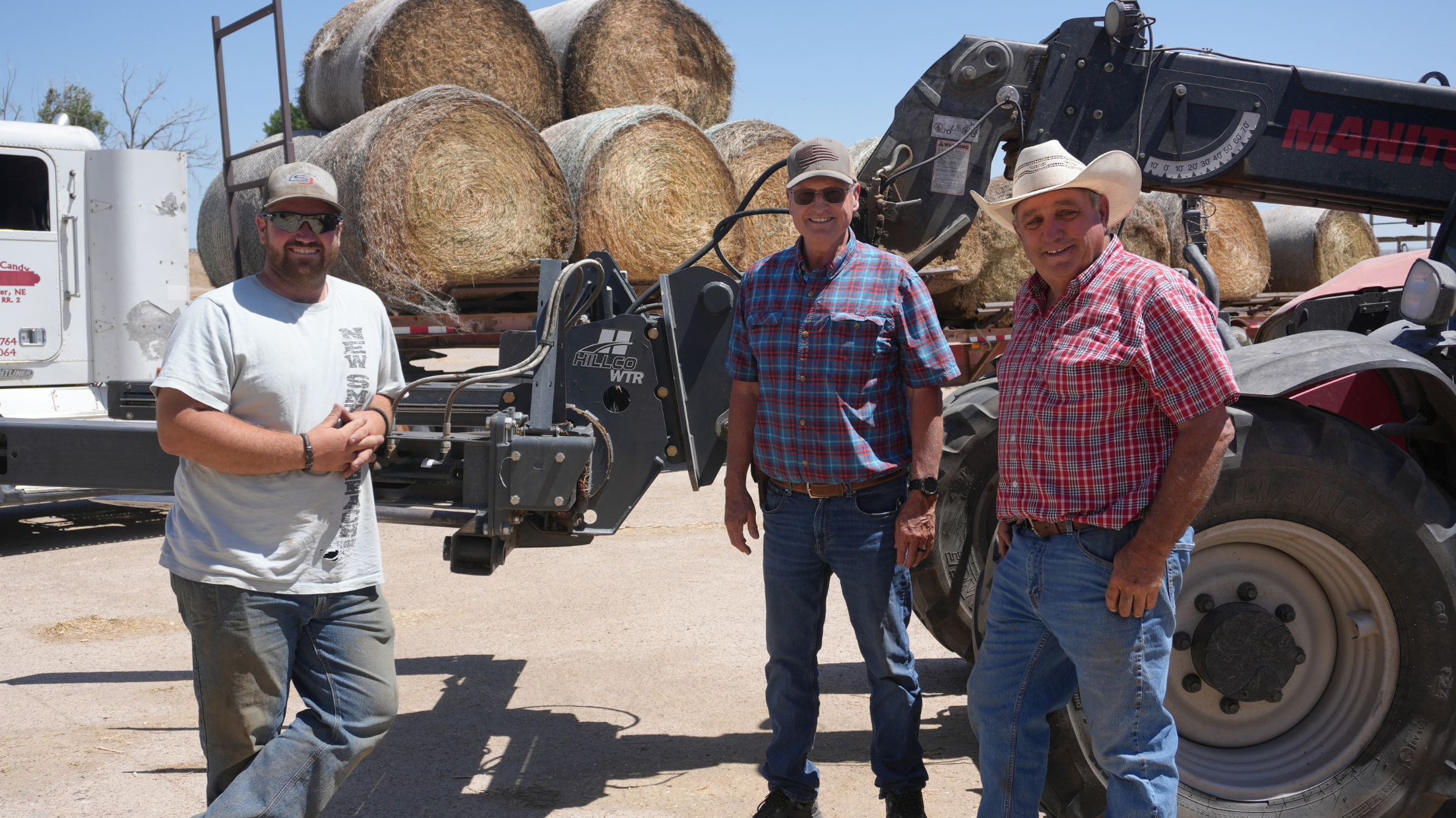
Quick Answer: Cutting the net wrap or twine off one bale isn’t something a person thinks much about, but a few hundred bales—that’ll get your attention. At Oshkosh Heifer Development in western Nebraska, experienced hay-grinding professionals Marty Zehr and Tyler Schroeder have put the Hillco Wrap Twine Remover through an extreme-use workload, cutting and collecting net wrap and twine while handling the bale—without crawling in and out of the cab upwards of 400 times a day.
Enter your farm data to calculate what a Hillco leveling system puts back in your pocket. Fields are pre-filled with study data — update the numbers that apply to your operation.
🌿 Acreage & Crop Information
🌽 Corn
Total acres
Avg yield (bu/ac)
Price ($/bu)
🌱 Soybeans
Total acres
Avg yield (bu/ac)
Price ($/bu)
🌾 Wheat optional
Total acres
Avg yield (bu/ac)
Price ($/bu)
% of total acres per slope range — all crops combined (must total 100%)
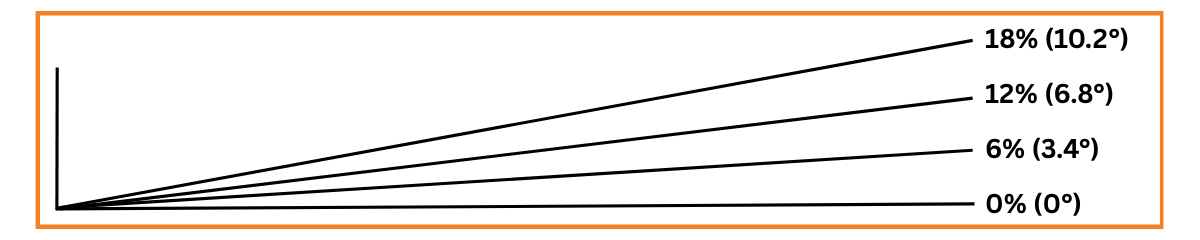
0–3% slope
4–9% slope
10–15% slope
16%+ slope
⚠ Slope percentages must add up to 100%
⚙ Harvest Speeds (MPH) — Without Leveling System
With a Hillco leveling system, your combine harvests slopes at your flat-ground (0–3%) speed.
Slope
Corn
Soybeans
Wheat
0–3%
4–9%
10–15%
16%+
🌿 Reduction in Machine Harvested Yield (bu/acre)
Enter your estimated reduction in harvested yield (bu/acre) for each slope range when operating at your flat-ground speed (0–3% slope). The calculator will adjust these values based on the ground speeds entered for each slope range. Hillco study data is pre-filled and may be overridden with your own estimates.
Slope
Corn
Soybeans
Wheat
0–3%
4–9%
10–15%
16%+
🚜 Combine & Header Information
Corn head width (ft)
Flex header — soybeans (ft)
Wheat platform width (ft)
Field efficiency (%)
Typically 70% (separator hrs ÷ engine hrs)
Cost per separator hour ($)
$300–$400 new, ~$150 older. Enter $0 to exclude.
💵 Operational Costs
Operator labor ($/hr)
Fuel price ($/gal)
Fuel consumption (GPH)
Typically 16–20 GPH
📈 Leveling System Investment
John Deere S7 Sidehill (18%): ~$84,000 | John Deere S7 Hillside (28%) w/ dual tire: ~$155,400 | Case IH Flagship Sidehill: ~$82,000 | Case IH Flagship Hillside w/ dual tire: ~$152,500. Consult your dealer for used values.
List price of leveling system ($)
Market value after year 5 ($)
Hillco systems retain ~40% of original value after 5 years
Annual interest rate (%)
Calculation period (1–5 yrs)
Annual inflation rate (%)
Your Hillco Leveling System ROI
$0
total net cash flow over your selected period
0.0 yrs
Estimated payback period
$0
Grain savings (total period)
$0
Labor + fuel savings
$0
Combine resale value gain
Annual separator hours
0
Without leveler
0
With leveler
0
Hours saved/yr
0%
% savings
Payback progress (5-year window)
Payback: calculating...
Cash Flow Breakdown — 5 Years
Grain savings (reduced MHY losses)$0
Labor savings$0
Fuel & lubrication savings$0
Residual value of leveling system$0
Increased combine resale value$0
Total positive cash flows$0
Leveling system cost (principal + interest)$0
Remaining note balance (if period < 5 yrs)$0
Maintenance cost (2%/yr after year 1)$0
Total negative cash flows$0
Net cash flow$0
$0
Net present value (NPV)
0%
Internal rate of return (IRR)
Results are estimates based on your inputs and Hillco study data. Actual results may vary. Contact your local Hillco dealer for a personalized quote | 1-800-937-2461 | hillcotechnologies.com
Proudly American Made
2026 Hillco Technologies, Inc. All Rights Reserved.