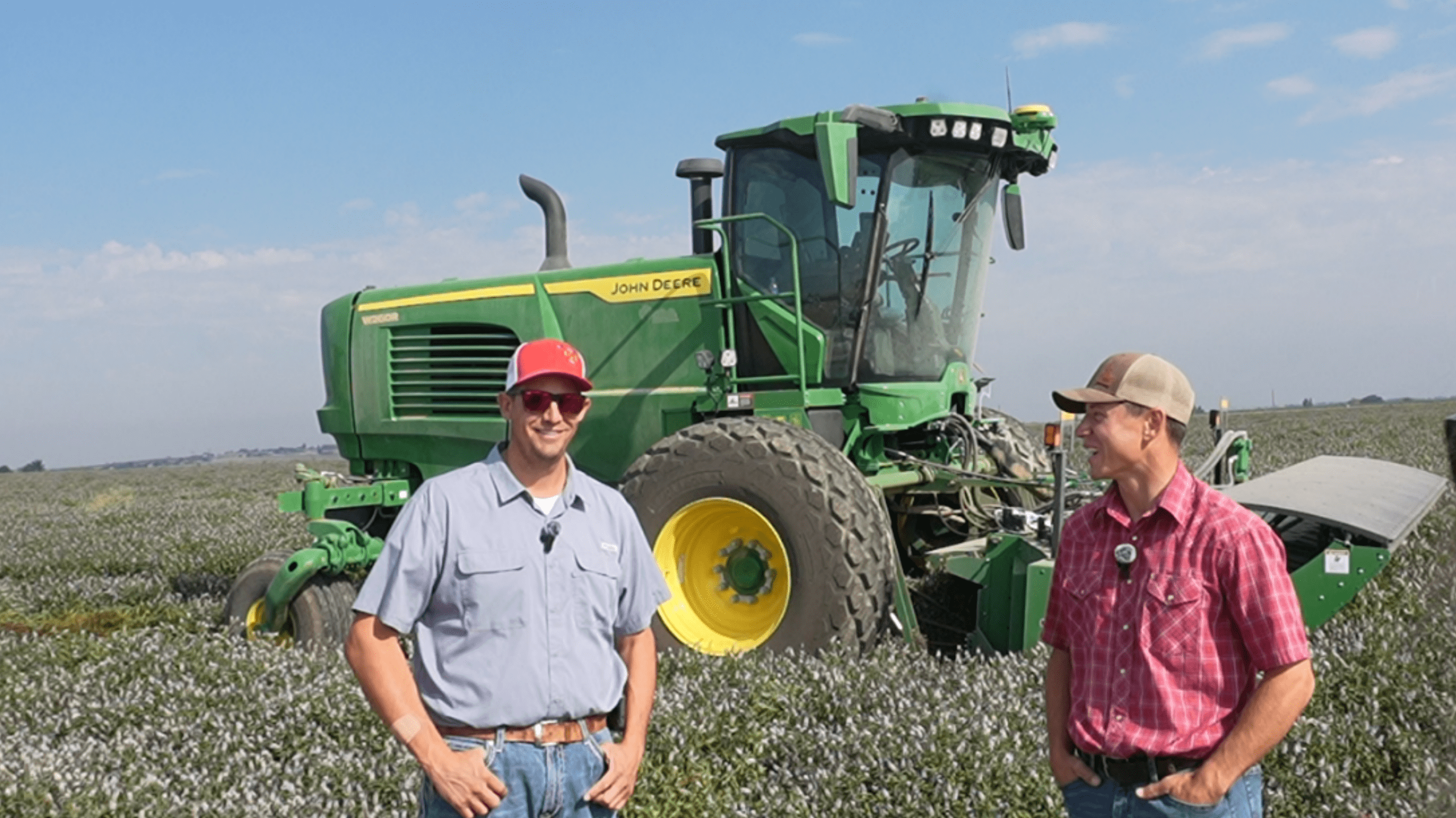
Christensen Farms evaluates the Hillco Specialty Crop Header and its impact on their operation in mint, carrot seed, and onion.
A Better Windrow for What Comes Next
At Christensen Farms near Nampa, Idaho, the windrow is only one step in a longer process. Peppermint is cut, chopped and taken to the farm’s still. Carrot seed brings its own handling demands. In both crops, what the windrower leaves behind affects how smoothly the next machine can work.
That made the shape and consistency of the windrow a practical priority when the farm evaluated the Hillco SC1500 Specialty Crop Header. The farm’s previous single-belt windrowers did the job, Tyson Christensen said, but they could leave a clumpier row. Those uneven bunches could interrupt crop flow into the pull-behind choppers and contribute to lugging or plugging.
With the SC1500 (or as Tyson likes to call it the “Hillco head”), Christensen Farms reports a more smooth, flat, and narrow windrow. For Tyson, that consistency is about feeding the chopper more evenly and matching the windrow to the roughly seven-foot pickup heads used by the farm’s John Deere pull-behind choppers.
Moving Through the Field at the Crop’s Pace
Field speed was another noticeable change. Tyson said the older machines commonly ran around 3 to 3.5 mph in suitable conditions and could slow further when crop bunched in the header. A major difference with the Hillco head in Tyson’s operations was running at around 7 mph even during the ride-along. He noted some conditions allowing 8 to 10 mph.
“It’s smooth driving, and you’re going faster. We’re going 7 miles an hour compared to our old ones- you were lucky to go 3 to 3.5.” – Tyson Christensen
While crop density, terrain, setup and operating conditions will affect any operation’s speed, Tyson pointed out the amount of work the crew at Christensen Farms can now complete during the available cutting window. He estimates the farm is swathing about twice as fast with fewer people assigned to the job using the Hillco head.
One Header Across Peppermint + Carrot Seed
The SC1500 was developed for specialty seed crops and is listed online for both mint and carrots. At Christensen Farms, the lack of a conditioner was an important fit for carrot seed, while the same header could also move into peppermint.
Tyson explains that the crops do not behave exactly the same. Second-year mint and carrot seed can both be heavy. Strip-tilled carrot ground can also create uneven spots that demand attention to knives and cutting angle. The crew adjusts drum speed, header tilt, ground speed and cut angle as conditions change. Once the first field is dialed in, Tyson said the basic setup generally stays consistent.
The farm also uses the header’s spray system. Tyson said the crew was skeptical at first and did not initially use it. After dealing with repeated plugging, they began using the system and found it helpful. Because spray-system configuration and use can vary by machine and application, operators should follow the applicable SC1500 manual and work with our team or their dealer on the correct setup.
Learning Together in a New Application
Christensen Farms is in its second season with the SC1500. Tyson’s account includes the kind of detail that matters when a product is being used in a new local application: there was a learning curve, and the setup evolved.
Hillco’s Sales and Engineering teams worked with the farm through forming-rod spacing for mint and added pickup fingers for down carrot seed. Our teams are also in steady communication with Campbell Tractor, Christensen Farms’ John Deere dealership, so the farm, dealer and manufacturer can keep building shared familiarity with parts and service.
Another point that Tyson spoke plainly about was maintenance. One hydraulic motor failed during the first season and was replaced. He said that after the replacement, the original head had no further issue, and a second SC1500 purchased by the farm had experienced no problems at the time of the interview. He also mentioned that routine work has included wear plates, knives and annual maintenance.
Support When the Harvest Day Starts Early
For Christensen Farms, the relationship behind the equipment has mattered as much as the initial setup. Carrot seed harvest can begin around 4 a.m., and field problems do not wait for ordinary business hours.
“They’re out early in the morning or late at night, whenever you need them. Especially during our carrot seed harvest, we’ll be out at four in the morning.” – Tyson Christensen
Tyson credited our salesman Kolten with coming to the field, helping the crew set the header and working through changes alongside the farm. That willingness to keep learning with the operator is what stood out to him.
Tyson’s Bottom Line
Tyson’s advice to other operators, grounded in the farm’s own experience:
“It’s definitely worth trying out,” he said. “Especially for our operation, it’s helped us a lot.”
For Christensen Farms, the practical gains are a more consistent windrow, higher field speed, fewer people needed for swathing and a support team willing to adapt the machine to peppermint and carrot seed.
Talk Through Your Crop and Setup
Every specialty-crop operation has its own crop mix, harvest window, traction unit and downstream equipment. We can help review current SC1500 compatibility, available options and application questions for your operation. Learn more about the Hillco SC1500 Specialty Crop Header or contact us at 800-937-2461.
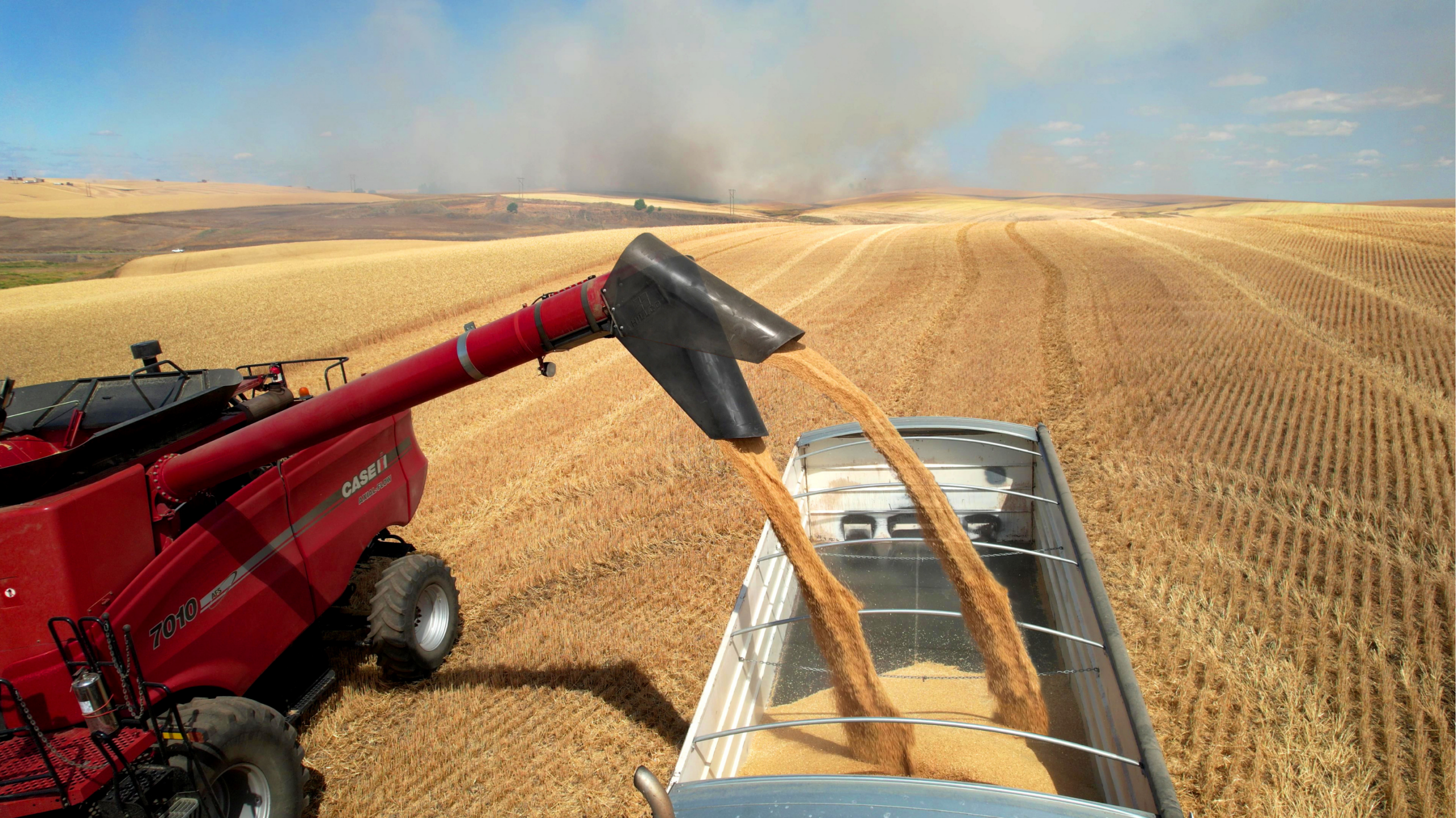
If you want better control over where grain lands in the cart, the Hillco Pivoting Spout is a practical upgrade for your Case IH combine. From the cab, a foot switch moves the spout through 37 degrees of travel, allowing you to direct the grain stream closer to or farther away from the combine without repositioning the machine.
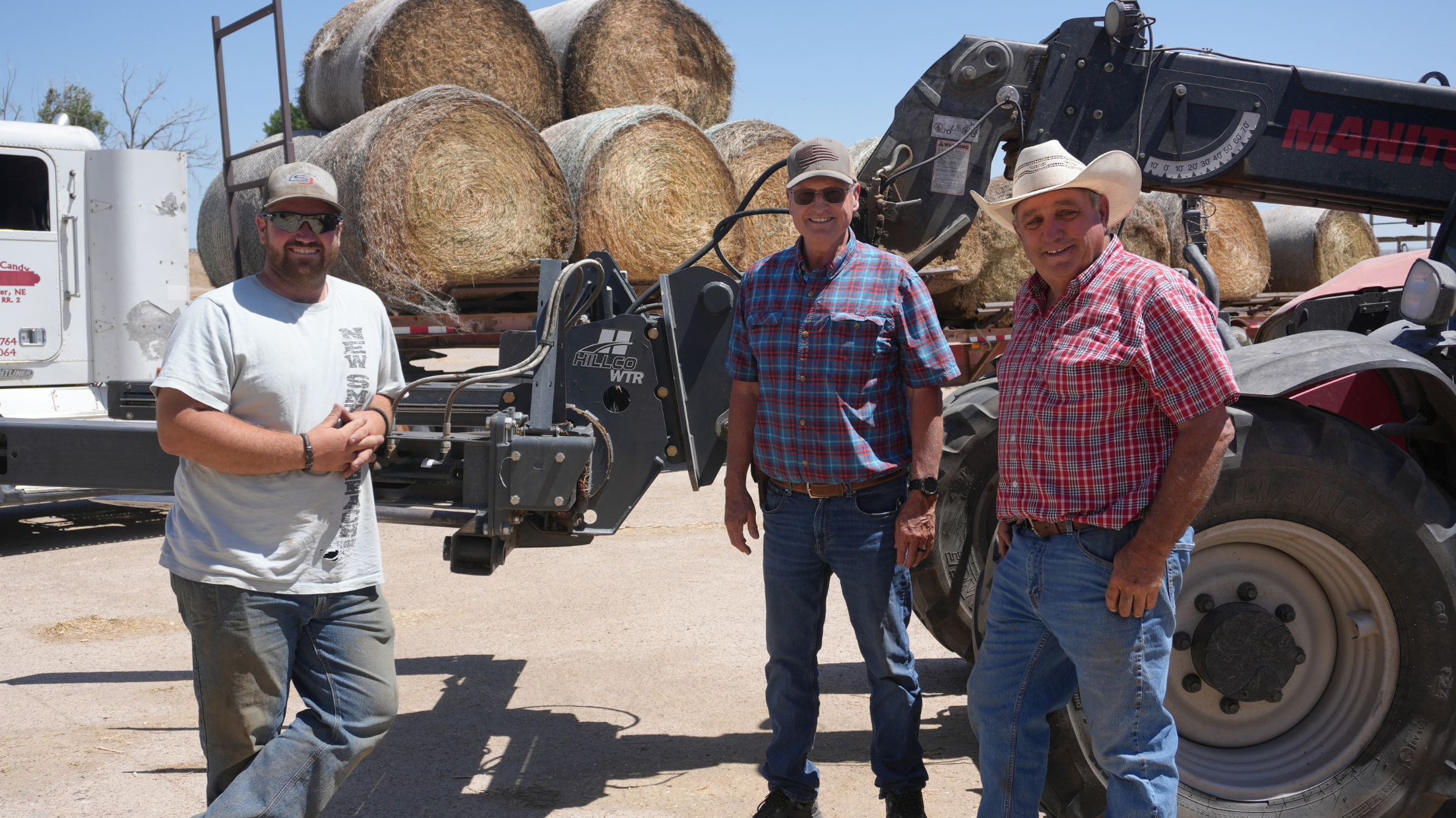
Quick Answer: Cutting the net wrap or twine off one bale isn’t something a person thinks much about, but a few hundred bales—that’ll get your attention. At Oshkosh Heifer Development in western Nebraska, experienced hay-grinding professionals Marty Zehr and Tyler Schroeder have put the Hillco Wrap Twine Remover through an extreme-use workload, cutting and collecting net wrap and twine while handling the bale—without crawling in and out of the cab upwards of 400 times a day.
Enter your farm data to calculate what a Hillco leveling system puts back in your pocket. Fields are pre-filled with study data — update the numbers that apply to your operation.
🌿 Acreage & Crop Information
🌽 Corn
Total acres
Avg yield (bu/ac)
Price ($/bu)
🌱 Soybeans
Total acres
Avg yield (bu/ac)
Price ($/bu)
🌾 Wheat optional
Total acres
Avg yield (bu/ac)
Price ($/bu)
% of total acres per slope range — all crops combined (must total 100%)
0–3% slope
4–9% slope
10–15% slope
16%+ slope
⚠ Slope percentages must add up to 100%
⚙ Harvest Speeds (MPH) — Without Leveling System
With a Hillco leveling system, your combine harvests slopes at your flat-ground (0–3%) speed.
Slope
Corn
Soybeans
Wheat
0–3%
4–9%
10–15%
16%+
🌿 Reduction in Machine Harvested Yield (bu/acre)
Enter your estimated reduction in harvested yield (bu/acre) for each slope range when operating at your flat-ground speed (0–3% slope). The calculator will adjust these values based on the ground speeds entered for each slope range. Hillco study data is pre-filled and may be overridden with your own estimates.
Slope
Corn
Soybeans
Wheat
0–3%
4–9%
10–15%
16%+
🚜 Combine & Header Information
Corn head width (ft)
Flex header — soybeans (ft)
Wheat platform width (ft)
Field efficiency (%)
Typically 70% (separator hrs ÷ engine hrs)
Cost per separator hour ($)
$300–$400 new, ~$150 older. Enter $0 to exclude.
💵 Operational Costs
Operator labor ($/hr)
Fuel price ($/gal)
Fuel consumption (GPH)
Typically 16–20 GPH
📈 Leveling System Investment
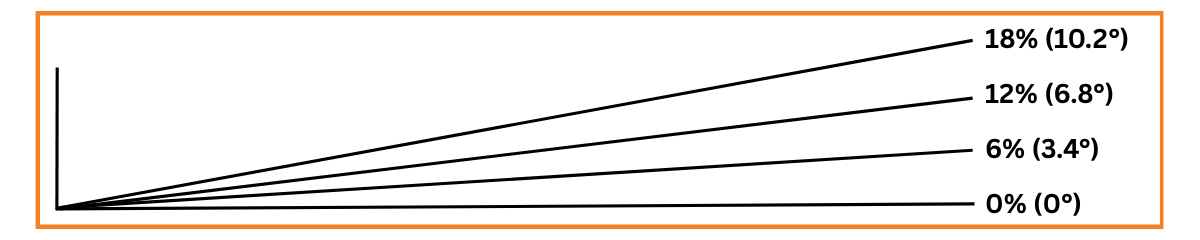
John Deere S7 Sidehill (18%): ~$84,000 | John Deere S7 Hillside (28%) w/ dual tire: ~$155,400 | Case IH Flagship Sidehill: ~$82,000 | Case IH Flagship Hillside w/ dual tire: ~$152,500. Consult your dealer for used values.
List price of leveling system ($)
Market value after year 5 ($)
Hillco systems retain ~40% of original value after 5 years
Annual interest rate (%)
Calculation period (1–5 yrs)
Annual inflation rate (%)
Your Hillco Leveling System ROI
$0
total net cash flow over your selected period
0.0 yrs
Estimated payback period
$0
Grain savings (total period)
$0
Labor + fuel savings
$0
Combine resale value gain
Annual separator hours
0
Without leveler
0
With leveler
0
Hours saved/yr
0%
% savings
Payback progress (5-year window)
Payback: calculating...
Cash Flow Breakdown — 5 Years
Grain savings (reduced MHY losses)$0
Labor savings$0
Fuel & lubrication savings$0
Residual value of leveling system$0
Increased combine resale value$0
Total positive cash flows$0
Leveling system cost (principal + interest)$0
Remaining note balance (if period < 5 yrs)$0
Maintenance cost (2%/yr after year 1)$0
Total negative cash flows$0
Net cash flow$0
$0
Net present value (NPV)
0%
Internal rate of return (IRR)
Results are estimates based on your inputs and Hillco study data. Actual results may vary. Contact your local Hillco dealer for a personalized quote | 1-800-937-2461 | hillcotechnologies.com
Proudly American Made
2026 Hillco Technologies, Inc. All Rights Reserved.